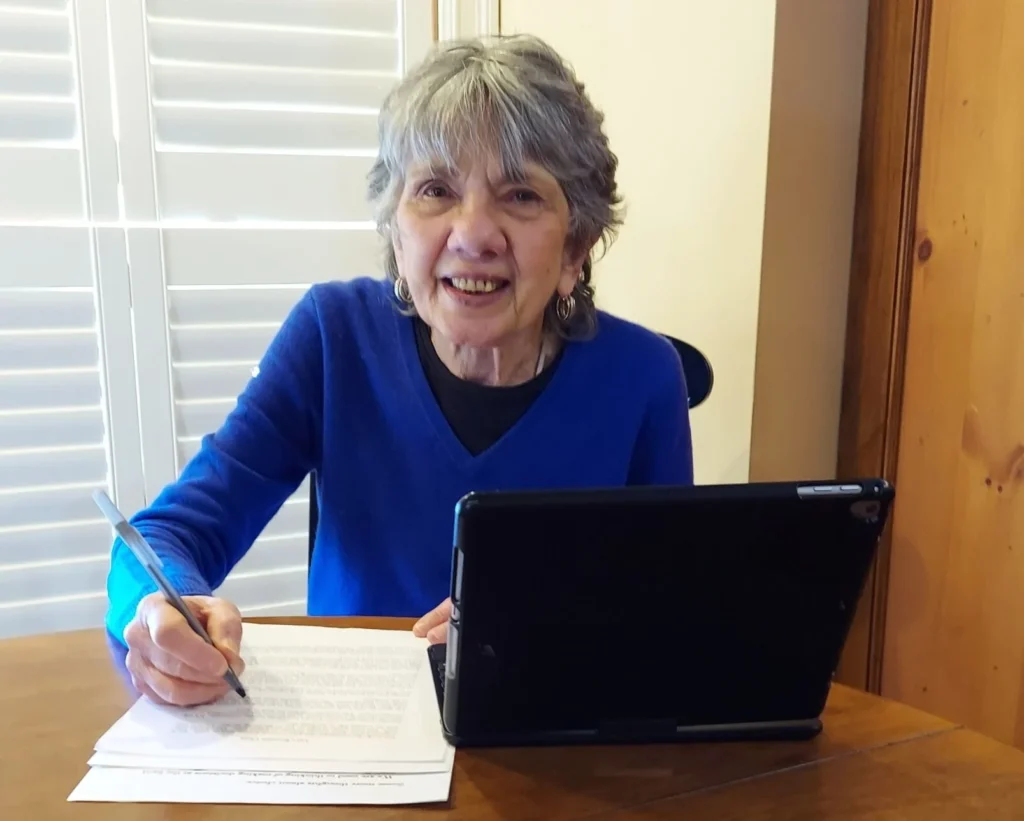
“Our work is about creating pathways to opportunity,” said Heather S. Giampapa, executive director of Vita Education Services in Doylestown.
One of Vita’s programs is the Jobs Readiness course taught at the Bucks County Correctional Facility by two women who firmly believe in second chances for those who have broken the law.
Known to prisoners only as Gail and Maxine, both women have been showing them how to put their best foot forward when they are freed, a critical step for their future.
Giampapa said “Vita’s Jobs Readiness Program provides incarcerated individuals with the essential skills and support they need to successfully transition into the workforce upon release. By equipping them with the tools to build a stable future, we’re helping to reduce recidivism while also empowering individuals to contribute positively to their communities.”
Lack of employment is considered one of the main risk factors for recidivism, the tendency for convicted criminals to return to jail.
In 2024, more than 150 prisoners eligible for the program took advantage of Jobs Readiness, according to Gail.
“We try to transform how they see themselves,” Gail said. The training helps them to become positive, crime-free members of the community, she said. It gives them tools to create brighter futures for themselves and their families.
One prisoner, soon to be released, said, “This was a very enlightening experience and worth every moment for me. I’m 10 steps ahead of the game now when it comes to being prepared.”
Another acknowledged, “I can talk about my criminal background and how far I’ve come to prospective employers.”
Gail said, “At Vita we teach decision-making and cognitive skills and we’ve been doing that since 1971, but more than 20 years ago we started helping people prepare for release by getting them to consider employment, getting ready for finding work, and possibly a career.” Before joining Vita, Gail worked at a psychiatric hospital.
Maxine, who has a background in human resources, helps prisoners create job resumes. She said, “Often inmates don’t even realize that they possess certain skills.”
Maxine helps them to recognize the skills they have previously taken for granted. “They haven’t considered their marketability,” she said. “Those who volunteer for the Jobs Readiness program learn to actually understand and acknowledge their employment potential.” Since 2015, Vita has created more than 500 resumes for incarcerated men and women.
“There’s a way to write a resume that brings out the positive,” Maxine said. She helps them to shape their resumes to be appealing to a prospective employer. “It’s helpful to know that it is still possible to find a job with my background, to learn how to talk about my criminal background when asked,” one prisoner said.
“We are careful not to lie on the resume,” Maxine added. “We never do that.” Gail agreed, warning, “There is no privacy. Anyone can Google you now and things might have changed since the data was collected. Something could have been expunged.”
She said it’s important to let a prospective employer know the job applicant was sent to prison because he committed a crime, but he can say, ‘While I was there, I enrolled in an addiction program, took a decision-making course, completed the Jobs Readiness program. I didn’t just sit around playing cards.’
“He can say, ‘I’ve made a lot of changes in my life. I held a job in jail. I took classes,’” Gail said. “There are plenty of prisoners who hold two jobs and that, to me, speaks to who you are as a worker.”
Jobs Readiness is a voluntary program for both men and women. It is an 18-hour course divided into nine two-hour sessions. Professional staffers teach group classes with the help of volunteer mentors who individually support and encourage participants to prepare for work.
The volunteers help the inmates practice interviewing skills, produce their own resumes, prepare to answer questions about their criminal backgrounds and develop an individual action plan to find work after leaving the facility.
Some even do so well they have jobs waiting for them when they’re released, Gail said.
Another Vita program, Decisions for Change (DFC), serves inmates as well as those on probation and parole. It uses decision-making as the context for cognitive skills building. Its basic goals are to increase critical thinking and problem-solving and decrease impulsiveness and antisocial behavior.
Since 1971, Vita’s education programs have aided more than 65,000 people seeking to improve their lives through education.
I’m 10 steps ahead of the game now when it comes to being prepared.” — a soon-to-be-released inmate at Bucks County Correctional Facility
Written by: Kathryn Finegan Clark